Focused Shockwave Therapy in Greeley & Denver, CO
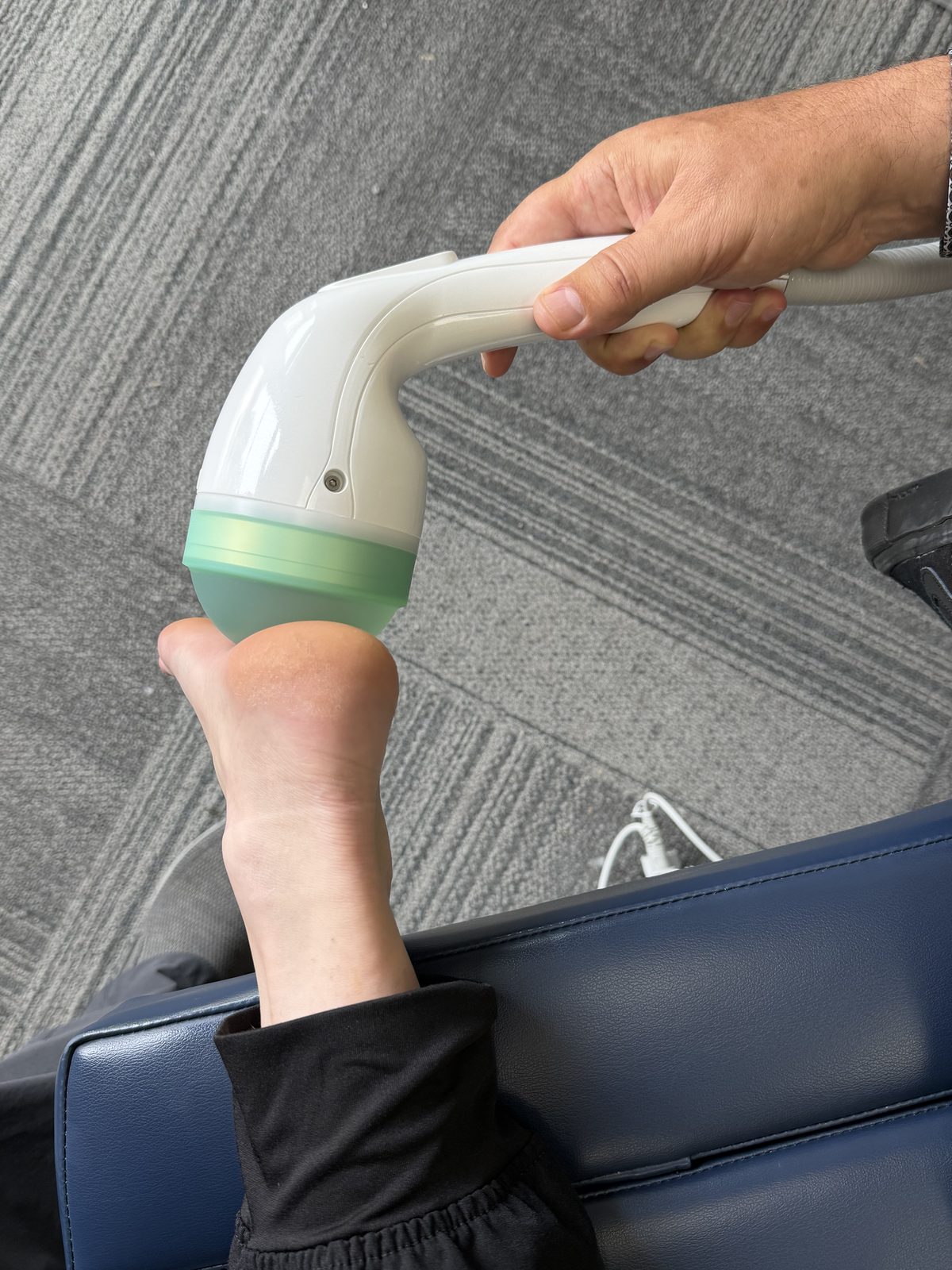
Our Greeley and Denver clinics both use focused shockwave therapy, delivering targeted acoustic energy to tissue that has stopped progressing on its own, often combined with rehabilitation exercises.

Why Shockwave Works
Most treatments manage symptoms. Extracorporeal shockwave therapy (ESWT) targets the root cause, using acoustic pressure waves to stimulate your body's natural healing response in tissue that has stopped progressing on its own.
Rather than masking pain, our rehab-focused plan addresses the underlying mechanics, helping you build a foundation for lasting recovery and a safe return to activity.
- Focused shockwave devices at both clinics, not radial
- Non-invasive treatment
- Short treatment sessions
- Minimal downtime
- Often combined with rehabilitation exercises
- Drug-free approach
Focused vs. Radial Shockwave
Shockwave devices come in two types, and the difference is in how deep the energy reaches.
Focused shockwave, or focused ESWT (fESWT), generates acoustic energy that converges at a set depth below the skin, so the pressure wave is concentrated on the specific tissue being treated. Radial shockwave generates its energy at the applicator head and disperses it outward as it travels, so the effect is strongest close to the surface and spreads more broadly.
Both our Greeley and Denver clinics use focused shockwave devices. Many clinics that advertise shockwave therapy use radial devices, which work differently. If a deeper structure is involved, such as an Achilles tendon or a hip, it is worth asking any provider which type they actually use.
Conditions Commonly Treated
Shockwave therapy is often used for chronic and stubborn conditions that have not improved with rest alone, including:
- Plantar fasciitis
- Achilles tendon pain
- Tennis elbow
- Shoulder pain
- Chronic tendon injuries
- Scar tissue restrictions
What Treatment Looks Like
- Evaluate the condition and movement pattern. We assess where the pain is coming from and what's keeping it overloaded.
- Deliver focused shockwave treatment. The treatment is used to stimulate healing in tissue that has stalled out.
- Build strength and tolerance between visits. You get the rehab side too, so the area is better prepared for real-life loading.
- Adjust based on your response. The plan isn't one-size-fits-all; it evolves as pain, function, and activity tolerance improve.
BOOK APPOINTMENT
RIGHT NOW
Making an appointment with us is quick and easy. Just fill out the information and we will contact you as soon as possible.
Frequently Asked Questions
Is shockwave therapy the same as ESWT?
A: Yes. ESWT stands for extracorporeal shockwave therapy, the clinical name for this treatment; extracorporeal simply means the energy is generated outside the body and directed inward. There are two types. Focused ESWT (fESWT) converges acoustic energy at a set depth, concentrating it on the tissue being treated. Radial shockwave spreads its energy outward from the applicator head, so it stays closer to the surface. Both our Greeley and Denver clinics use focused ESWT. Because both types are commonly advertised simply as shockwave therapy, it is worth asking any provider which one they use.
Does insurance cover shockwave therapy?
A: Most commercial insurance plans do not cover shockwave therapy. Coverage and self-pay pricing can vary, so please contact our Greeley or Denver office for current details.
How many sessions will I need?
A: Most patients complete a program of 3-6 sessions, with initial improvement often noticeable after the first 2-3. Complex or long-standing injuries may benefit from a more extended treatment program. Your provider will evaluate your condition at your first visit and give you a realistic plan.
How soon will I notice results?
A: Many patients notice initial improvement after the first 2-3 sessions, with fuller results typically developing over the full 3-6 session program. The healing response continues for weeks after your program ends, meaning results often keep improving even after treatment is complete. Your provider tracks your progress throughout so you can see real change, not just feel it.
What does a shockwave session feel like?
A: Most patients describe it as a deep pressure or vibration, similar to a firm deep tissue massage. Sensitive areas may feel mildly uncomfortable, but it is generally well-tolerated. Your provider adjusts intensity based on your feedback throughout the session.
Is there downtime after treatment?
A: Most patients continue normal daily activities following treatment. Some mild soreness around the treated area is common and typically resolves within 24-48 hours. Your provider will give specific guidance based on your condition and the area being treated.